AUTUMN OFFER: Save £100 per person on any trip over £1,000!* Limited time only.

Bhutan on Foot: Exploring the Path to Happiness

Since joining KE 13 years ago, Bhutan has been on Tav Lane’s travel radar. Finally, she got the chance to experience it for herself on our Druk Path... Read more
Bhutan on Foot: Exploring the Path to Happiness

Since joining KE 13 years ago, Bhutan has been on Tav Lane’s travel radar. Finally, she got the chance to experience it for herself on our Druk Path Trek – from the unforgettable climb to the Tiger’s Nest Monastery, perched high above the Paro valley, to walking through spectacular mountain landscapes and experiencing Bhutan’s unique culture. Here, Tav shares her journey.

Image

"I’m not really a bucket list person – although I have trekked to Everest Base Camp – but ever since I first saw a photo of the Tiger’s Nest Monastery in Bhutan, I’ve had a burning desire to visit. I can’t quite put my finger on what drew me to it, but the way it clings to the mountainside at over 3,000m has always fascinated me, and it most definitely got my travel pulse racing!

Bhutan has only been open to travellers since 1973 - which happens to be the year I was born! It wasn’t until 1999 that television and internet access arrived, and even today, some of the country’s most remote regions have no electricity. Trek to Laya village or journey through the remote hamlets on the Snowman Trek, and you’ll pass tiny homesteads where modern technology still feels a world away. It’s this sense of stepping back in time that makes Bhutan so fascinating. It’s one of the few places in the world where life and traditions have remained remarkably unchanged for generations.

The Tiger’s Nest Monastery, officially known as Paro Taktsang, is much more than Bhutan’s most recognisable landmark. Its significance comes from the combination of Buddhist legend, centuries of pilgrimage, Bhutanese history and its extraordinary setting. It is believed to be where Guru Rinpoche meditated in the sacred caves in the 8th century after flying there on the back of a tigress. The monastery itself was built in the late 17th century around these caves but was severely damaged by a fire in 1998. Thankfully it has now been painstakingly rebuilt using traditional Bhutanese craftsmanship. It was a magnificent sight, and after years of wanting to visit, I was finally experiencing this extraordinary place for myself.

Image

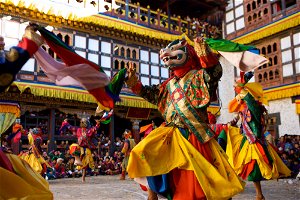
I travelled on the October departure of the Druk Path Trek, which coincided with the Thimphu Festival. This meant we spent our first week sightseeing and visiting some of Bhutan’s fascinating cultural sites before trekking to Tiger’s Nest and along the Druk Path. For me, it was the perfect way to do it, as those first few days gave me more time to acclimatise before heading to higher altitudes – as you already land at around 2,200m!

On the morning of the hike up to Tiger’s Nest Monastery, we were lucky. The weather was gloriously clear, dry, hot and sunny, which meant the path was mostly dry. The trek up to the monastery is relatively straightforward, although reasonably challenging, and a mixture of sandy, dry paths, muddy sections and steps. There’s a café about halfway up, around 1.5 hours into the trek, which makes for a welcome rest stop and has incredible views of the monastery.

Image

From there, it gets a little tougher, with around 700 steep steps to descend – and then ascend in places - before you reach the monastery. This is where you have no choice but to take it slow and steady (thank goodness for trekking poles!) as you are well and truly at 3,000m – and your body knows it. Passing a glorious sacred waterfall, the last climb up to monastery is steep but reaching it on foot made the arrival even more rewarding.

Image

We had a tour of three of the temples, although there are more – not all of them are open to the public. From the terrace, we had an uninterrupted view across the Paro Valley, stretching as far as the eye could see. It was here that I really appreciated just how heavily forested the country is. Bhutan is incredibly green, with dense, lush subtropical valleys giving way to pine and rhododendron forests high in the mountains. This abundance of forest is one of the reasons Bhutan can be described as carbon negative – one of only three countries in the world with this status.

The trek down was much easier than the trek up (you’d like to think so), and we were also dropping in altitude so breathing became that bit easier, although we still had to tackle plenty of steep steps. All in all, it took around six hours, including plenty of nice, long breaks. It was a rewarding hike - and I finally made it to the Tiger’s Nest. It was worth every step.”

Footer logos
Your Wishlist
No Wishlist Items

Start your next adventure.

Click the heart icon on the search or holiday pages to save a holiday to your wishlist.

Holiday Search